Automated CEO Reports with Python: A Dashboard That Updates Itself
The Monday Report Nobody Wanted to Prepare
In almost every B2B company we have worked with, there exists a silently resented tradition: the Monday executive report. Someone, usually an analyst or the marketing manager, spends between two and four hours every Sunday or Monday morning consolidating data from multiple sources, formatting tables, updating charts, and preparing the presentation for the executive team meeting.
It is manual, repetitive, and frustrating work. The data changes every week but the process is always the same. And when the analysis is finally ready, the data it contains is already 48 hours old.
The CEO makes decisions with information that is two days old. The team that prepared the report invested four hours that could have been spent on real analysis. And the cycle repeats the following Monday.
The Dashboard That Works While You Sleep
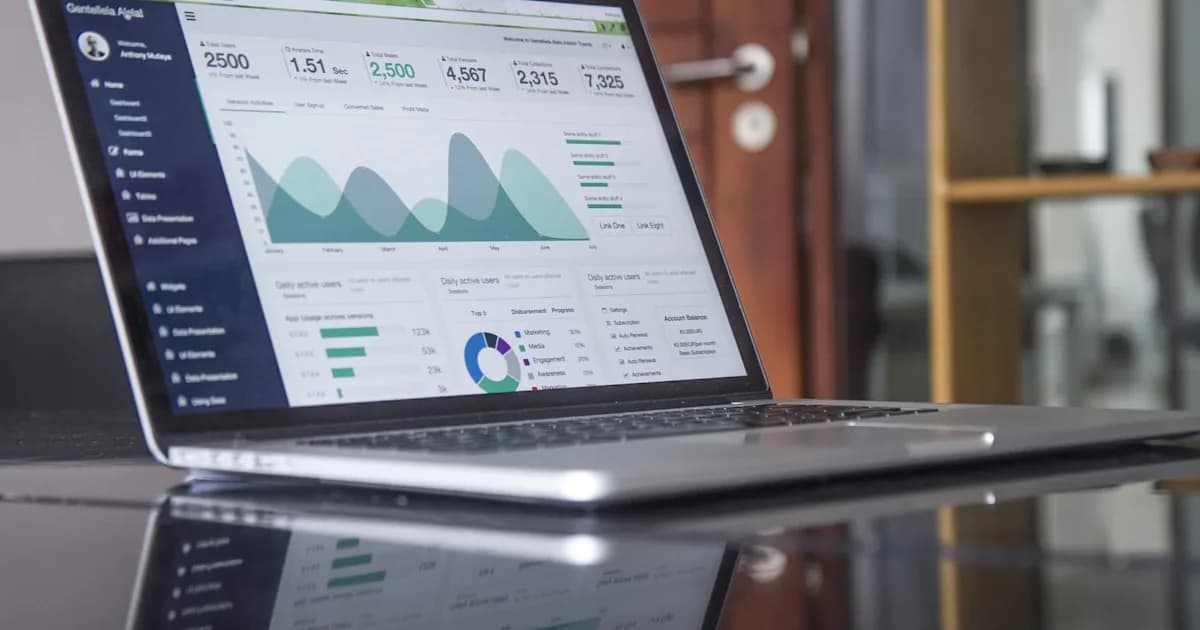
Python can connect to all the data sources the executive team needs to monitor and automatically update a real-time dashboard, or send a formatted executive summary directly to each executive's inbox every Monday at 7 a.m., without human intervention.
This is not a technological utopia. It is a data architecture that many companies already have implemented and that, once configured, runs on its own indefinitely.
The metrics typically included in an automated executive dashboard for B2B companies are precisely those that the CEO needs to make the week's decisions:
- Sales pipeline: Active opportunities, total value, advancement speed by stage, and changes compared to the previous week.
- Marketing metrics: CPL by channel, volume of qualified leads, weekly trend, and monthly projection.
- Product indicators: Active users, adoption of key features, and early churn signals.
- Operational financials: MRR, ARR, NRR, and variations compared to forecast.
The Story of the 8 Hours Recovered
An executive team in Santiago implemented this system after calculating that between the marketing analyst and the sales analyst, eight hours per week were being lost to the preparation of the executive report. Four hundred hours per year. Equivalent to ten weeks of one person's work.
The initial configuration took three days of work. From that moment on, the system ran on its own. Every Monday at 7 a.m., the CEO and VPs received in their inbox an executive summary with the numbers from the previous week, the most important variations compared to forecast, and the alerts requiring immediate attention.
The analyst's four hours were redirected toward cohort analysis, scenario projections, and market intelligence work. Work that had never had time to be done before.
Beyond the Report: Intelligent Alerts
What makes an automated dashboard system with Python powerful is not just that it replaces manual work. It is that it can continuously monitor and alert when something falls outside the expected range, even mid-week when nobody is checking the dashboard.
If Google Ads CPL rises 30% on Tuesday afternoon, the system detects it and notifies the marketing director at that moment, not the following Monday. If a campaign that was converting at 4% drops to 1.5%, the alert arrives in hours, not days.
That speed of detection and response is, in competitive markets, a real operational advantage.
The CEO Who Arrived Prepared to Every Meeting
The most relevant impact was not the time saved. It was the quality of the conversations in executive meetings. When data arrives fresh, contextualized, and with variations already calculated, the meeting is not for reviewing numbers. It is for deciding what to do with them.
That transition — from reporting meetings to decision meetings — is one of the most valuable organizational changes that automation can produce. And Python is the infrastructure that makes it possible.
---Benefits for Your Business
- Real-time executive visibility: the CEO and executives have immediate access to key KPIs without depending on someone preparing the Monday report.
- Elimination of low-value work: analysts stop spending hours formatting Excel and can dedicate that time to the analysis that truly generates impact.
- Consistent data across the organization: a single automated dashboard eliminates discrepancies between the CFO's report, the marketing report, and the sales report.
- More agile decision-making: when data is available in real time, decision cycles shorten from weeks to days or even hours.
Recommended Next Steps
- Define the metrics that matter: work with the CEO and leaders to agree on no more than 10 metrics that are truly relevant to the state of the business.
- Automate data extraction: build Python scripts that extract data from each source (CRM, billing, analytics) and consolidate them into a central database.
- Choose the visualization layer: Metabase or Google Looker Studio are free options that connect to PostgreSQL or BigQuery and generate professional executive dashboards.
Ready to scale?
Schedule a technical call to see how we can apply these strategies to your business.